Technology Offers Site map description
H
Universidad de Cádiz posted this:
Healthy oil from marine and vegetal sources, natural enhancer of flavors characterized by a high conservation and good performance at cooking temperatures.Our product: .- Stabilizes fish and / or algae oils, slowing its normal oxidation process, that until now hindered its alimentary uses. .- Provides oil blend with a more balanced proportion of natural antioxidants (polyphenols) and vitamins (A, D and E) than the oils offered current in the market. .- Regarding vegetable oils rich in omega 6, this mixture provides an optimal balance with omega 3 which has a potent anti-inflammatory effect. .- It avoids the use artificial additives such as flavor enhancers..- It enriches the flavor in preparing of dishes and foodstuff from the sea. .- It can be heated without its drastic deterioration Universidad de AlicanteUniversidad de Alicante
Universidad de Alicante posted this:
Healthy smoking! Machine for making filters that reduce the inhalation of nicotine, tars and toxic compounds in tobacco smokeThe Institute of Chemical Process Engineering of the University of Alicante has developed a machine that makes it possible to manufacture filters capable of trapping 60% of the nicotine and tars present in tobacco smoke, as well as a large part of the rest of the toxic and carcinogenic compounds.The process used is fully automated, very fast, environmentally friendly and produces very economical and efficient filters for RYO, MYO and conventional cigarettes. Scientific experiments carried out in the laboratory confirm the excellent results of this new filter concept that protects the health of smokers.The technology is patent protected. We are looking for companies interested in acquiring this technology for its commercial exploitation worldwide.
 UNIVERSIDAD DE BURGOSUNIVERSIDAD DE BURGOS
UNIVERSIDAD DE BURGOS posted this:
Healthy, Active and Satisfactory Aging Program with institutionalized seniors (HASAPIS)It is a CD-Rom that includes the creation and development of a Program of physical and psycho-socio-stimulative activities that provides benefits on personal autonomy and physical function of institutionalized older people.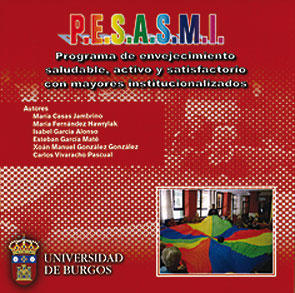
UNIVERSIDAD DE BURGOS posted this:
Healthy, Active and Satisfactory Aging Program with institutionalized seniors (HASAPIS)It is a CD-Rom that includes the creation and development of a Program of physical and psycho-socio-stimulative activities that provides benefits on personal autonomy and physical function of institutionalized older people.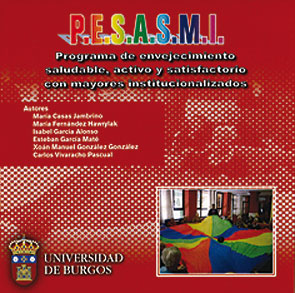
- UNIVERSIDAD DE BURGOSUNIVERSIDAD DE BURGOS
 Luxembourg Institute of Science and Technology (LIST)Luxembourg Institute of Science and Technology (LIST)Luxembourg Institute of Science and Technology (LIST)
Research Institute
Luxembourg Institute of Science and Technology (LIST) posted this:
Heat2Power – Plant-scale optimisation of electricity production from waste heatLIST is developing an optimisation software prototype to address this complexity issue. More particularly, it uses process integration methods, formulated as operation research model, to generate optimal system configurations. Complementary, steam and ORC turbine models as well as other key components are modelled as input data to the optimisation algorithm. Finally, input and output data treatment algorithms, combined with their respective Graphical User Interfaces, structure the necessary information for the tool. Fabian BelinLuxembourg Institute of Science and Technology (LIST)Fabian Belin
Partnerships Development & IP Valorization at Luxembourg Institute of Science and Technology (LIST)
Fabian Belin posted this:
Heat2Power – Plant-scale optimisation of electricity production from waste heatLIST is developing an optimisation software prototype to address this complexity issue. More particularly, it uses process integration methods, formulated as operation research model, to generate optimal system configurations. Complementary, steam and ORC turbine models as well as other key components are modelled as input data to the optimisation algorithm. Finally, input and output data treatment algorithms, combined with their respective Graphical User Interfaces, structure the necessary information for the tool.
Partnerships Development & IP Valorization at Luxembourg Institute of Science and Technology (LIST)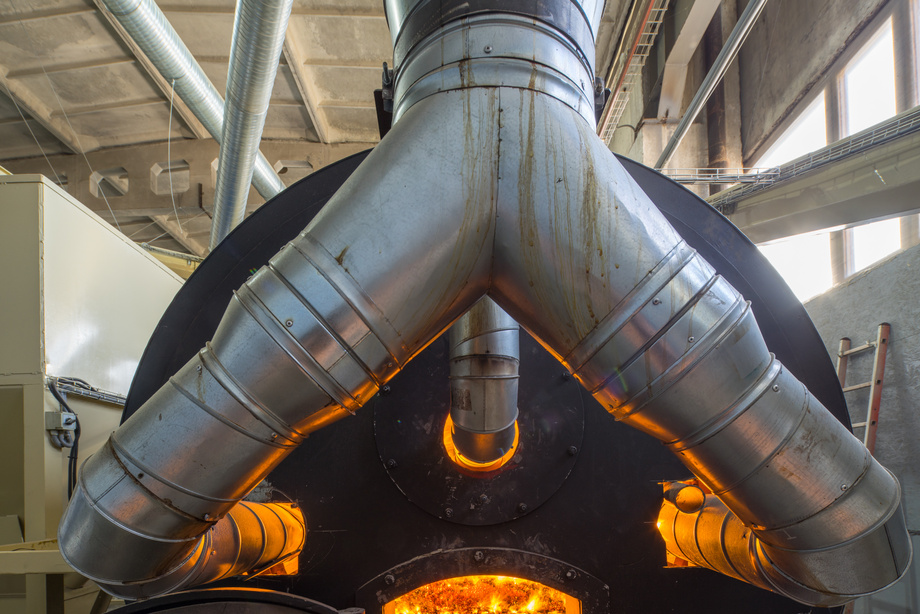
Barani Design posted this:
Helical solar radiation shield for temperature sensorHelical shape provides natural aspiration of warmer air flow. Creates a vortex flow (similar to a mini tornado) which effectively ventilates the inside without a fan. Advanced aerodynamic design techniques from the aerospace industry enable this compact shield to achieve unprecedented levels of accuracy.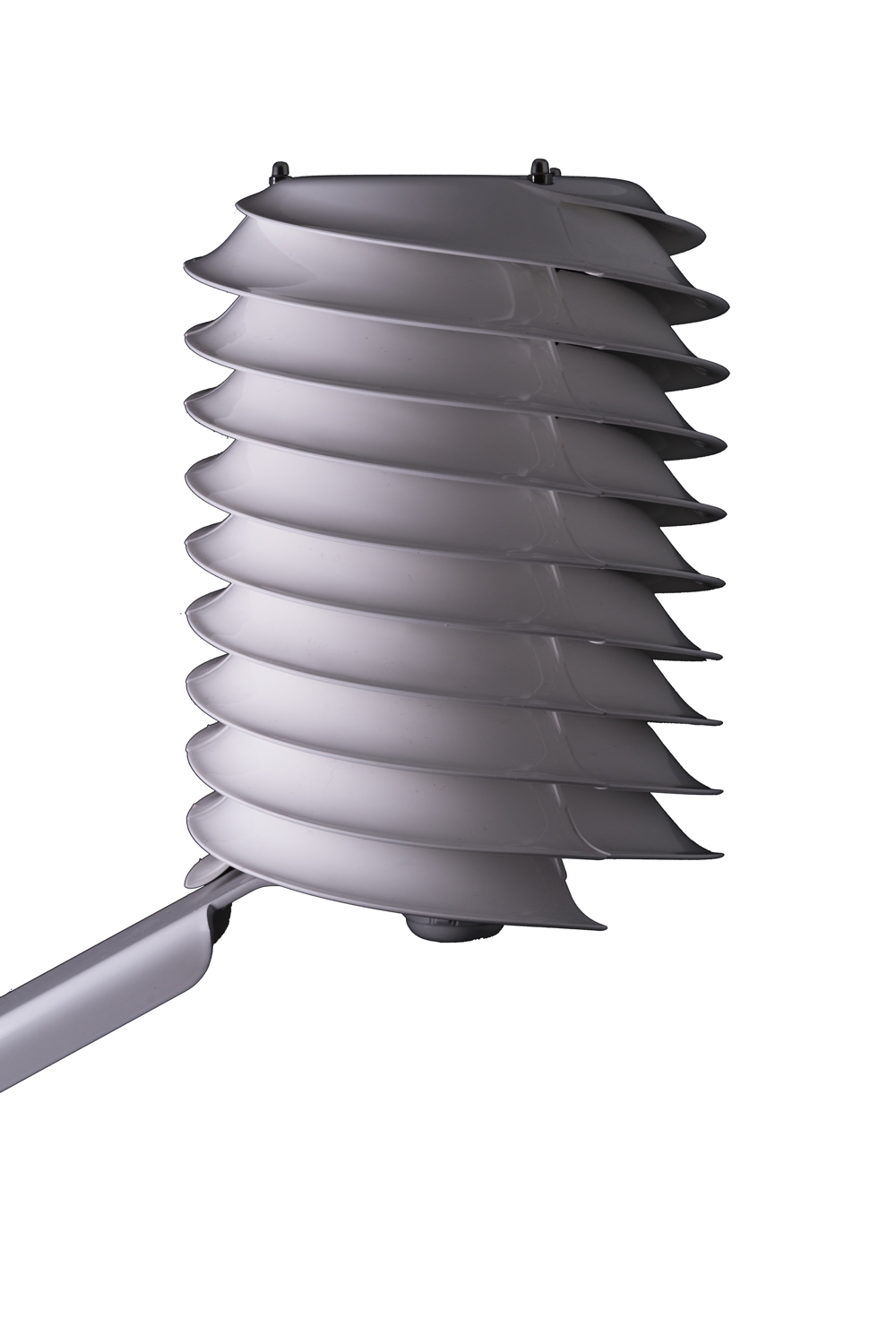
 RAMOT at Tel Aviv University Ltd.RAMOT at Tel Aviv University Ltd.
RAMOT at Tel Aviv University Ltd. posted this:
Hemin formulated in hyaluronan liposomes for treating inflammatory diseaseshemin formulated in hyaluronan liposomes for directing body macrophages into anti-inflammatory reparative phenotype. This immunomodulation could improve myocardial protection, infarct healing, repair and regeneration after myocardial infarction. Furthermore, our invention could be useful in the development of novel targeted therapies for treatment of inflammatory diseases such as myocarditis, atherosclerosis and any other inflammatory disease. Project ID : 10-2014-856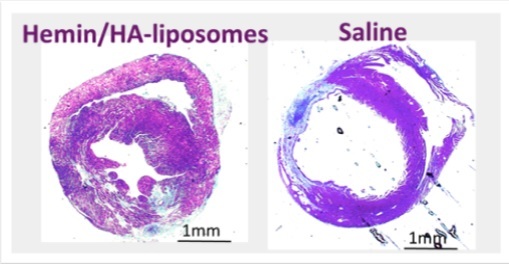
Meghan Meyer posted this:
Hepatitis B Virus-Woodchuck Hepatitis Virus Chimera for Hepatitis B Virus Infection of Woodchucks- Development of an Eastern woodchuck animal model that produces a human HBV infection in the woodchuck animal through the administration of a new HBV-WHV chimeric virus - This new animal model may be used to study acute and chronic WHV and HBV infections in the same host for comparison of immunopathogenesis, liver disease development, and liver cancer. - Chronically HBV-infected woodchucks provide a new tool for the screening, evaluating, and developing new drugs that are very specific to HBV nucleic acids and proteins.
Other at Georgetown University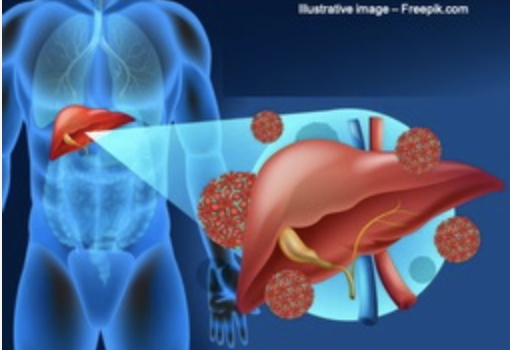
 Universidad de Alcalá-OTRIUniversidad de Alcalá-OTRI
Universidad de Alcalá-OTRI posted this:
Heterogeneous NCH complex of palladium and their uses as recoverable catalysts.AA research Group from the Department of Organic Chemistry and Inorganic Chemistry at University of Alcalá (Spain) has designed catalysts suitable for organic synthesis processes based on supported N-heterocyclic carbene (NHC) complexes of palladium, which are magnetically separable after their use, reusable and resistant to metal leaching, and useful in carbon-carbon coupling reactions. The group is looking for companies in the chemical and pharmaceutical sectors to reach licensing agreements or collaboration and commercial agreements for technical assistance.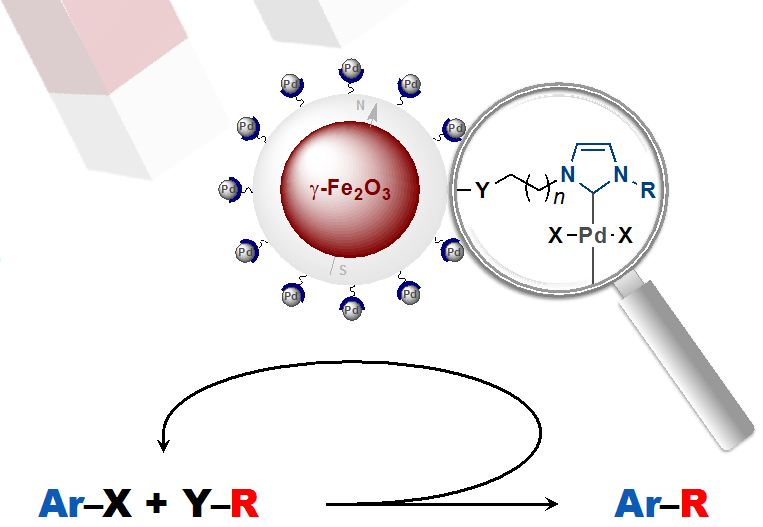
Fundació URV posted this:
Hidracot, Organic Matter Removal (CatalyticAdvanced Oxidation, COD < 5.000 ppm)Catalytic Advanced Oxidation technology removes the organic matter at atmospheric pressure and mild reaction temperatures (< 60 ºC) getting clean and reusable water. It is a simple process that uses very mild operating conditions and does not require complex systems. It is a clean technology, and does not generate waste or by-products, with low power consumption and small space requirements compared to biological treatments. The organic pollutants are oxidized to CO2 gas obtaining conversion values around 99%. Gerard SisóUniversitat Autonoma de BarcelonaGerard Sisó
GEMMA-CIMITEC Group Research and Innovation Promoter at Universitat Autonoma de Barcelona
View ProfileGerard Sisó posted this:
High capacity electromagnetic encoders for motion control applications and near-field Chipless-RFID systemElectromagnetic encoders, based on a static transmission line working at microwave circuits and a movable chain of metallic or dielectric inclusions, constitute a good alternative to the well-known optical encoders. Optic systems present very good spatial resolution, but they exhibit a limited robustness for operation under harsh/hostile conditions, or in environments subjected to pollution or dirtiness, such as those encountered in many industrial scenarios. Magnetic encoders and Hall-effect sensors are also of interest for motion control, but such sensors are based on inductive elements or magnets, thereby representing a higher cost solution, as compared to electromagnetic encoders. Additionally, electromagnetic encoders can be used as Chipless RadioFrequency IDentification (RFID) tags. Namely, a certain identification code can be provided to the chain of inclusions. Near-field Chipless-RFID systems are of interest in Smart Packaging and logistics applications.
GEMMA-CIMITEC Group Research and Innovation Promoter at Universitat Autonoma de Barcelona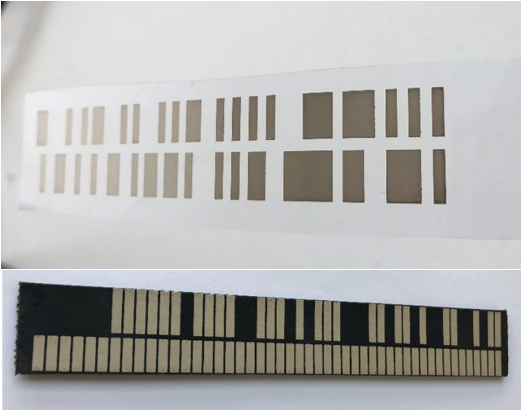
 Maria João CardosoInstituto de TelecomunicaçõesMaria João Cardoso
Intellectual Property and Technology Manager at Instituto de Telecomunicações
View ProfileMaria João Cardoso posted this:
High capacity photonic beamforming for phased antennasPhased array antennas are suitable for massive MIMO wireless communications, of which 5G and satellite communications are paradigmatic examples. These 3 patent families propose a photonic beamforming system that is able to process a large number of RF signals with a very broad bandwidth, something that cannot be done with digital processors. The proposed photonic beamformer is thus a key enabler for broadband massive MIMO wireless communications.
Intellectual Property and Technology Manager at Instituto de Telecomunicações
 Hussein IbrahimJazan UniversityHussein Ibrahim
Inventor,Business Developer Manager at Jazan University
Hussein Ibrahim posted this:
High Cooling Inducer Air conditionA Water condition contains tow upper and lower rooms separated by a perforated barrier to pass water from top to bottom,with a turbo fan in the lower tank (Water Tank ). The fan pulls the air from the outside through the water flowing from top to Bottom .The Heat Exchange is expelled to the outside via controllable out let,the water conditioner also contains cardboard that can be installed in the barrier.
Inventor,Business Developer Manager at Jazan University Lars CuypersMax-Planck-Innovation GmbH
Lars Cuypers posted this:
High Ferroelectricity: First Method for Production of Bulk SnTiO3The invention presents the first scalable method for producing bulk SnTiO3, a material with remarkable ferroelectric properties. Previously limited to thin films due to the instability of tin(II) oxide at high temperatures, this method circumvents these limitations, enabling industrial-scale synthesis. The new process produces high-purity SnTiO3 with unique crystalline structures, expanding its applicability across ferroelectric, piezoelectric, and electro-optical devices. This breakthrough facilitates the development of advanced electronics such as FeRAM, tunable capacitors, and precision actuators, marking a significant advancement in materials science and technology.
Senior Patent and Licensing Manager at Max-Planck-Innovation GmbH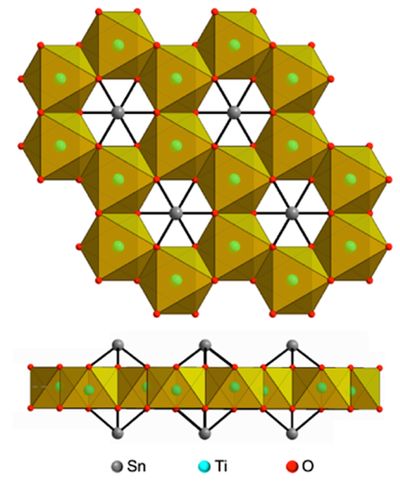
 Steinbeis Centre for Technology Transfer IndiaSteinbeis Centre for Technology Transfer India
Steinbeis Centre for Technology Transfer India posted this:
High Performance Hybrid Composite MaterialsThe technology has been developed to for making hybrid composite materials as an alternative to timber , synthetic wood and plastics. Uniqueness of the technology / product:- > Stronger than teak wood, timber, synthetic wood & plastic > Durable & Customized products can be made > Resistance to moisture, corrosion, termite & fungus > Fire's self- extinguishing nature > Cost effective & maintenance free > Alternative for teak wood & avoid deforestation
 Markus RemmJenoptik Automotive North America
Markus Remm posted this:
High precision High speed Robotic Laser cutting for Metals and PlasticsUsing a patented robot encapsulated Beam guide system Jenoptik can offer robot laser cutting of 3D Metal and Plastic parts. High accessibility due to the fact that there is no external beam delivery (e.g. no fiber or no mirror arm). High speeds of up to 300mm/sec Laser power of up to 4kW Beam source can be selected based on application (e.g. CO2 Laser for plastic cutting; Fiber Laser for metal cutting)
R&D Staff / Researcher at Jenoptik Automotive North America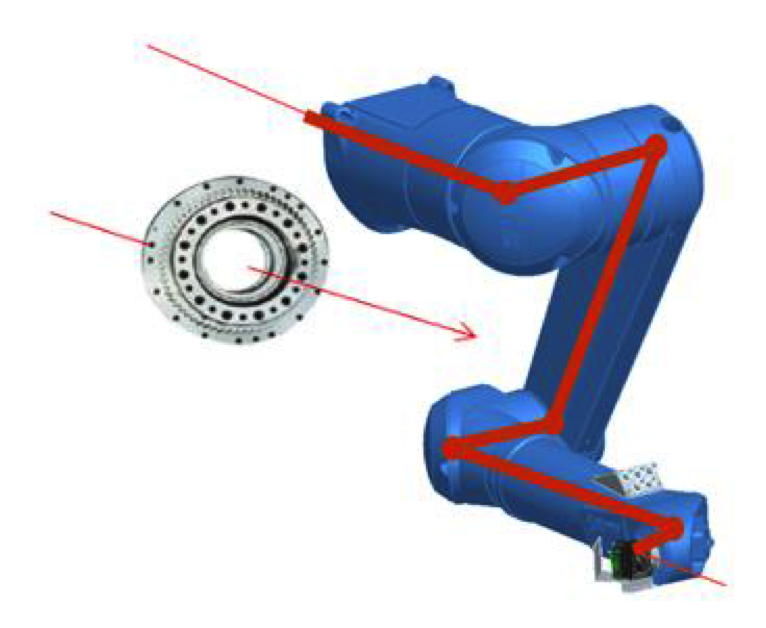
 Universidade de Santiago de CompostelaUniversidade de Santiago de CompostelaUniversidade de Santiago de Compostela
Technology Transfer Office
Universidade de Santiago de Compostela posted this:
High Quality Thin-films (down to 4nm) by Water-based Chemical SolutionCheaper alternative, versatile, with the quality required for fundamental studies and applications. - Very high quality of epitaxial (bi)layers, down to 4 nm, comparable to PLD. - Outstanding homogeneity (over 1" substrate) and very affordable alternative to high-vacuum tech. Some examples: - Yttrium Iron Garnet (YIG) over GGG; ZnO over sapphire. - Ferroelectric BiFeO3 on LSMO. Manganites, cobaltites and their combinations - Combined with MBE, e.g. Multilevel device integrated on silicon: Small, 2017, 1701614, cover (http://doi.org/10.1002/smll.201770208).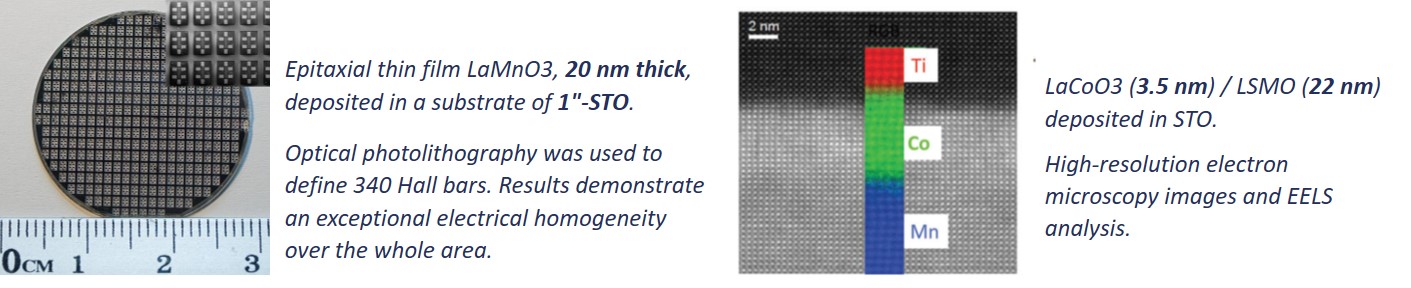
 Universitat Politècnica de Catalunya - UPCUniversitat Politècnica de Catalunya - UPC
Universitat Politècnica de Catalunya - UPC posted this:
High resolution non-contact measurement of biophysical parametersA prototype of a novel laser-based displacement sensor enabling subnanometric resolution measurements of biophysical parameters has been developed. The system is in addition extremely compact (few cm3), robust and non-contact. Partners to further develop the current prototype, to pursue novel applications, and/or to establish commercial agreements along with technical cooperation are sought.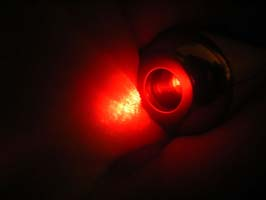
 CSIC - Consejo Superior de Investigaciones CientíficasCSIC - Consejo Superior de Investigaciones Científicas
CSIC - Consejo Superior de Investigaciones Científicas posted this:
High resolution paterning in organic semiconductorsCSIC has developed a new a method for high resolution structural and/or compositional modification in a molecular organic semiconductor film. This method has applications in the production of electronic, optoelectronic and photonic devices, among others. Industrial partners are being sought to collaborate through a patent license agreement. An offer for Patent Licensing
 Alfonso del Rey PérezICMAB-CSIC
Alfonso del Rey Pérez posted this:
High resolution patterning in organic semiconductorsIcmab researchers have developed a new method for high resolution structural and/or compositional modification in a molecular organic semiconductor film. This method has applications in the production electronic, optoelectronic and photonic devices, among others.
Technology Transfer Officer at ICMAB-CSIC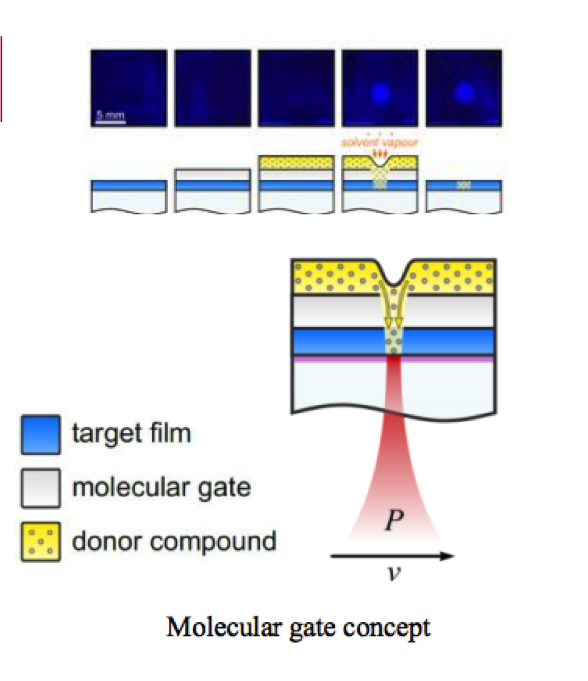
 Georgetown UniversityGeorgetown University
Georgetown University posted this:
High sensitivity detection system for measuring Terahertz frequenciesThis invention presents a method of detecting terahertz frequencies using a substrate with improved temperature dependence, high electrical performance and exhibits high variation of resistance with temperature which is crucial for thermal detection applications. The strong temperature dependence increases responsiveness enabling superior performance in thermal detection systems compared to conventional technologies.
 University of WaterlooUniversity of Waterloo
University of Waterloo posted this:
High throughput protein isolation & purification systemBackground The global protein purification and isolation market size was valued at USD 7.8 billion in 2021 and is expected to grow at a compound annual growth rate (CAGR) of 10.5% from 2022 to 2020, reaching USD 19.16 billion by 2030. Drug discovery relies on the structural information of a protein to predict its potential efficacy. Common technologies used during this process include mass spectroscopy, amino acid sequencing, x-ray crystallography, nuclear magnetic resonance, and surface plasmon resonance. Most of these methods require highly purified protein samples, and often in large quantities ranging from ug to mg. However, current purification technologies involving chromatography or gel/capillary electrophoresis are batch modes rather than continuous, and this limits the throughput. Furthermore, they may require harsh solvents or detergents that will damage the protein or alter its structural properties.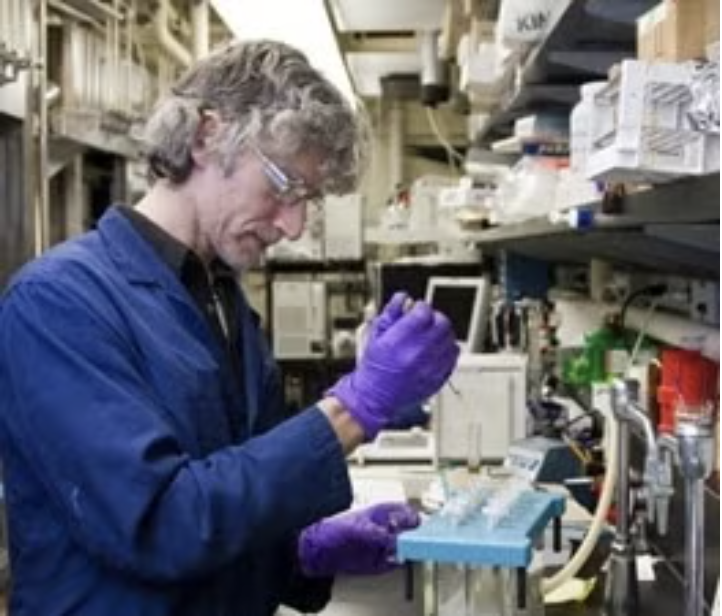
- University of WaterlooUniversity of Waterloo
University of Waterloo posted this:
High UV efficiency lightingResearchers at the University of Waterloo have created a low-cost hybrid nanomaterial, “NanoLite”, which illuminates pure white light and can be processed into light emitting structures and devices from liquid (i.e. solution) or solid (i.e. powder) forms. This NanoLite material makes full use of the UV light (absorbs broadly in the UV spectral range) and converts it into visible light. This allows for very energy efficient fluorescent lighting to be made using NanoLite. Additionally it is possible to create fluorescent lights that do not require the use of mercury. Because of its versatility and chemical compatibility, this material can be used in various configurations and devices and can also be tuned to produce any colour of light.
- RAMOT at Tel Aviv University Ltd.RAMOT at Tel Aviv University Ltd.
RAMOT at Tel Aviv University Ltd. posted this:
High Voltage Photovoltaic Cells with High EfficiencyA novel photovoltaic cell is described for converting sunlight to electricity at higher efficiency relative to existing cells, and with improved flexibility for integration in modules, both one-sun and concentrating. The new cell contains many small sub-cells, which are internally connected in series. Such configurations are called Monolithic Integrated Modules (MIM) and they are capable of providing very high open circuit voltage. Our MIM design is based on a monolithic device with vertical PN junctions with significant expected advantages in performance relative to existing MIM designs: higher voltage; smaller contact area and no front metallization grid, leading to higher efficiency; better utilization of the solar spectrum; and better matching to integration in modules including concentrator modules. High-voltage cells can be electrically connected in parallel instead of series, leading to nearly independent operation (voltage-coupled instead of current-coupled) even under non-uniform illumination and even partial shading conditions. This will improve the overall performance of a photovoltaic system, and permit a less demanding and less expensive optical design. Project ID : 6-2011-180  PhD Isabel Gavilanes-Perez (RTTP)Spanish National Research CouncilPhD Isabel Gavilanes-Perez (RTTP)
Open Innovation Manager at Spanish National Research Council
View ProfilePhD Isabel Gavilanes-Perez (RTTP) posted this:
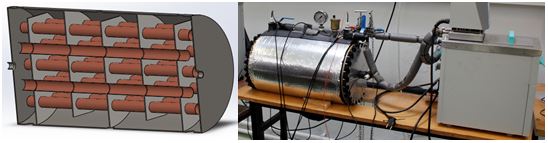
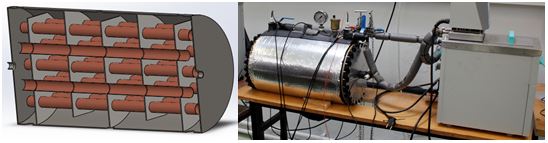
High-accuracy industrial Radon detection systemAdvanced industrial radon detection system based on an innovative cylindrical chamber design, featuring axial sensor distribution and precision focusing bars to ensure superior measurement accuracy, reliability and long-term operational stability in demanding environments. Prolonged exposure to radon in confined spaces such as basements and mines poses serious health risks, including respiratory problems and lung cancer. Older and underground buildings often lack adequate ventilation, making early detection of radon essential to preserve healthy environments. Existing solutions are either very inexpensive (approx 200 EUR) but unreliable, or accurate but very costly (approx. 10.000 EUR) and slow in measurement. Cost-effective, high-precision, and versatile radon detection solution, designed to meet the growing market demand for monitoring in older buildings, confined spaces, and underground environments. Competitively priced compared to other reliable detection alternatives, it also offers advanced features such as isotope identification and network connectivity. It consists of a cylindrical chamber with axially distributed sensors and focusing rods, providing fast, reliable, and highly accurate measurements, while offering a more affordable and precise option than existing systems.
Open Innovation Manager at Spanish National Research Council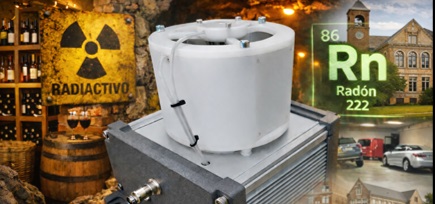
FUNDITEC posted this:
High-added value products from Agro-Food residuesTechnology for development of valuable products for the food and packaging industry that applies to hygienic design of facilities and food safety and Circular Economy (Life cicle, Eco design, Reuse of food by-products including water) Looking for Research co-operation and Commercial agreement with technical assistance