Polymer–Carbon Nanotube Nanocomposite Porous Membranes for High-Flux Desalination & Water Filtration
Patents for licensing

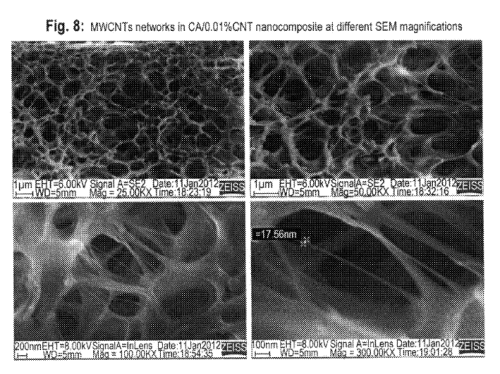
This technology relates to asymmetric polymer–carbon nanotube (CNT) composite porous membranes for water filtration and desalination. The membrane integrates randomly oriented (optionally functionalized) CNTs within a polymer matrix in a single membrane layer, and is manufactured using a scalable phase-inversion process. The approach is intended to enhance water permeation (flux) while maintaining practical salt retention, supporting use in desalination/filtration of seawater, brackish water, and wastewater streams.
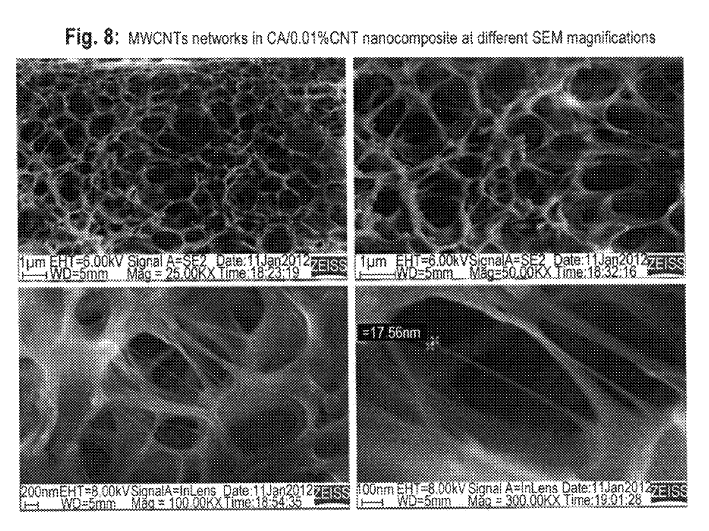
An asymmetric composite membrane comprising a polymeric matrix with carbon nanotubes dispersed within a single membrane layer, where CNTs are randomly oriented in the matrix and the membrane is formed by phase inversion.
How it is made (manufacturing route): A surface is coated with a film of a polymer solution containing polymer + CNTs in solvent(s), then immersed in a non-solvent to trigger solvent/non-solvent demixing (phase inversion) to form the CNT-containing membrane; the membrane may then be removed from the surface.
Representative material system described: The polymeric matrix may be cellulose acetate; CNT content may be up to ≤ 5 wt% (including multi-walled CNTs), and CNTs may be functionalized (e.g., by acidic groups). A pore-forming additive may also be included.
Why it matters: The invention is positioned as a simpler, cost-effective, and industrially scalable CNT-membrane fabrication pathway (phase inversion) relative to more complex CNT membrane constructions, while targeting improved permeability/selectivity behavior for desalination and filtration.
Example performance anchor (as claimed): A single-layer composite membrane embodiment is described with an average salt-retention rate > 68.8% when filtering 1000 ppm NaCl in a pressurized water cell at 24 bar at room temperature. \n\nWhat an industry partner gets: A granted, licensable IP position around composition + manufacturing method + desalination/filtration use, suitable for scale-up into flat-sheet and potentially module-based membrane products (subject to partner engineering and qualification).
Current development status
Experimental technologies
Applications
• Reverse osmosis (RO) desalination (seawater/brackish) • Nanofiltration / ultrafiltration / microfiltration (as membrane media or pretreatment) • Wastewater polishing / reuse • Industrial water treatment where improved flux vs. selectivity trade-offs are needed • Potential extension to other selective fluid separations where CNT-functionalization and pore architecture are relevant.
Desired business relationship
Patent licensing
Technology development
Adaptation of technology to other markets
The American University in Cairo (AUC) is committed to teaching and research of the highest caliber and provides exceptional liberal arts and professional education in a cross-cultural environment. With a diverse campus community and strong academic ecosystem, AUC advances research, applied innovation, and real-world impact in Egypt and beyond. AUC’s Technology Transfer Office supports this mission by protecting university intellectual property and partnering with industry to license technologies and enable spin-outs.

Create your free account to connect with George Efram and thousands of other innovative organizations and professionals worldwide
Send a request for information
to George
Technology Offers on Innoget are directly posted
and managed by its members as well as evaluation of requests for information. Innoget is the trusted open innovation and science network aimed at directly connect industry needs with professionals online.
Need help requesting additional information or have questions regarding this Technology Offer?
Contact Innoget support