Hypothesis Generation
Innovative Products and Technologies

- System with the ability to monitor the internet and other data continuously, discover hypotheses potentially explaining data, and notify users of identified and potential threats
- Scalable, automated, theoretically sound method with wide-ranging national security and other applications.
- Method is executable in real-time or near-real time, scalable to large applications, and places less pre-set boundary limits on search capabilities when compared to other current methods
OVERVIEW
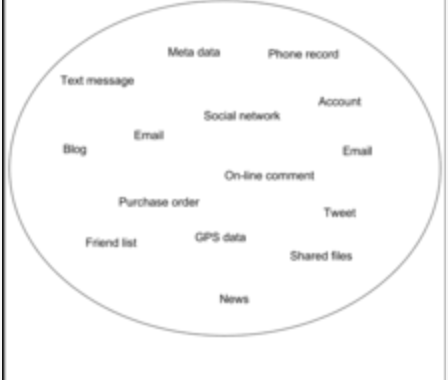
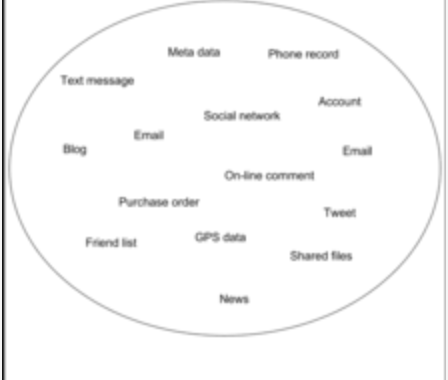
Researchers at Georgetown University Medical Center Division of Integrated Biodefense along with the Department of Computer Science have developed a novel automated turnkey system to recognize threats earlier than any current technology, enabling real-time or near-real-time surveillance of massive amounts of data. This method allows the data itself to define a space of possible hypotheses, optionally merges and groups similar hypotheses, and then weighs and selects a subset of relevant hypotheses for further consideration.
The system enables human and/or machine event recognition by analyzing data to construct one or more qualitative metrics, establishing a baseline for the qualitative metric(s), identifying additional data over time, identifying an updated baseline, and outputting the adjusted baseline for display to the user. This system thus identifies known signatures of threats in massive data sets and identifies hypotheses that can explain observed data to identify unknown threats. Rather than bringing an a priori conceived hypothesis, it lets the data itself define a ranked set of possible hypotheses.
BACKGROUND
The amount of digital information on global networks is increasing exponentially and the demand for processing large amounts of digital data in real time is particularly heightened especially for identifying emerging risks and threats, particularly in the area of national security. At present, a lot of surveillance focuses on “horizon scanning” methods, which are human-based schemes for monitoring both proprietary and open-source data streams thought to be relevant to known or unknown risks or threats. While these conventional methods are the norm, they are often inefficient and cannot identify surprises, latest developments, or novel plots because these searches rely on a human conception and a defined set of interests or knowledge that a computer-aided search treats as prior knowledge. Such pre-set boundaries limit the capability of a search to detect and identify unexpected events. Thus, there is a need for an improved system to identify relevant hypotheses in data, including surprising hypotheses, and to recognize known and emergent event signatures and enable human and/or machine event recognition of safety and related events.
Benefit
Market Application
System having the ability to explain data through hypothesis generation, with broad applications in national security and other areas.
Publications
Our mission is to advance GU’s innovations through strategic alliances and new venture creation, to facilitate the translation of research breakthroughs into tangible solutions, and to cultivate a dynamic and inclusive environment for entrepreneurship. We advance this mission in support of the GU community and for the benefit of society.

Create your free account to connect with Meghan Meyer and thousands of other innovative organizations and professionals worldwide
Send a request for information
to Meghan
Technology Offers on Innoget are directly posted
and managed by its members as well as evaluation of requests for information. Innoget is the trusted open innovation and science network aimed at directly connect industry needs with professionals online.
Need help requesting additional information or have questions regarding this Technology Offer?
Contact Innoget support