CUO/TIO2 polymeric nanocomposites with improved NIR reflectance for coloured external wall finishing coatings of buildings
Innovative Products and Technologies

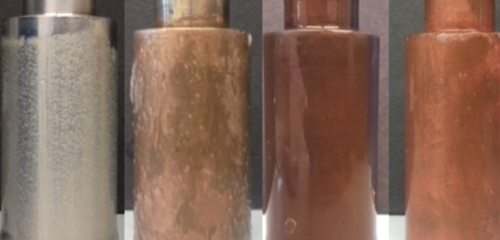
The use of darker colours for aesthetic purposes has been steadily growing in the construction field. This application has led buildings to have non-efficient thermal characteristics, due to the colour’s high absorption of solar radiation. Consequently, this increases the energy demand for cooling. To overcome the rise in energetic costs and ecologic footprint, these nanocomposites, which may be incorporated in conventional black colourants, ally the aesthetic side and the functional one by absorbing solar radiation in the visible spectrum, and at the same time increasing reflectance in the infrared spectrum in 40% when compared to conventional coatings.

Background:
The use of darker colours for aesthetic purposes has been steadily growing in the construction field. This application has led buildings to have non-efficient thermal characteristics, due to the colour’s high absorption of solar radiation. Consequently, this increases the energy demand for cooling. To overcome the rise in energetic costs and ecologic footprint, these nanocomposites, which may be incorporated in conventional black colourants, ally the aesthetic side and the functional one by absorbing solar radiation in the visible spectrum, and at the same time increasing reflectance in the infrared spectrum in 40% when compared to conventional coatings.
Benefits:
This invention provides an improvement over traditionally used dark colourants, without compromising colour at the human eye level, bringing a large increase in the overall reflectivity. Incorporating these nanomaterials in coatings allows an effective control of the radiative properties through the tunning of their optical properties. Improvements in the durability of construction materials are also provided by this invention, due to the reduction of thermal stresses.
Potential comercial use/applications:
The invention relates to the technical field of coatings, specifically in the context of exterior-finish black colourants. This technology has clear commercial advantages over traditional dark coatings, since it attains a substantial increase in reflectiveness without compromising the colour’s original characteristics. In general, any coated dark-coated surface that’s under the effect of solar radiation can benefit from this invention, as it greatly reduces the absorption of radiation, decreasing thermal damage and increasing the structure’s life cycle.
U.Porto Inovação was established in 2004 to support the University’s innovation value chain by facilitating the transfer of knowledge and strengthening the relationship between the University and businesses. With over 20 years of experience, U.Porto Innovation focuses its activities on research at the University, entrepreneurship within the academic community and U.Porto’s growing connections with industry.
Create your free account to connect with University of Porto and thousands of other innovative organizations and professionals worldwide
Send a request for information
to University of Porto
Technology Offers on Innoget are directly posted
and managed by its members as well as evaluation of requests for information. Innoget is the trusted open innovation and science network aimed at directly connect industry needs with professionals online.
Need help requesting additional information or have questions regarding this Technology Offer?
Contact Innoget support