Photoactivatable ruthenium compounds for more effective and selective cancer treatment
Patents for licensing

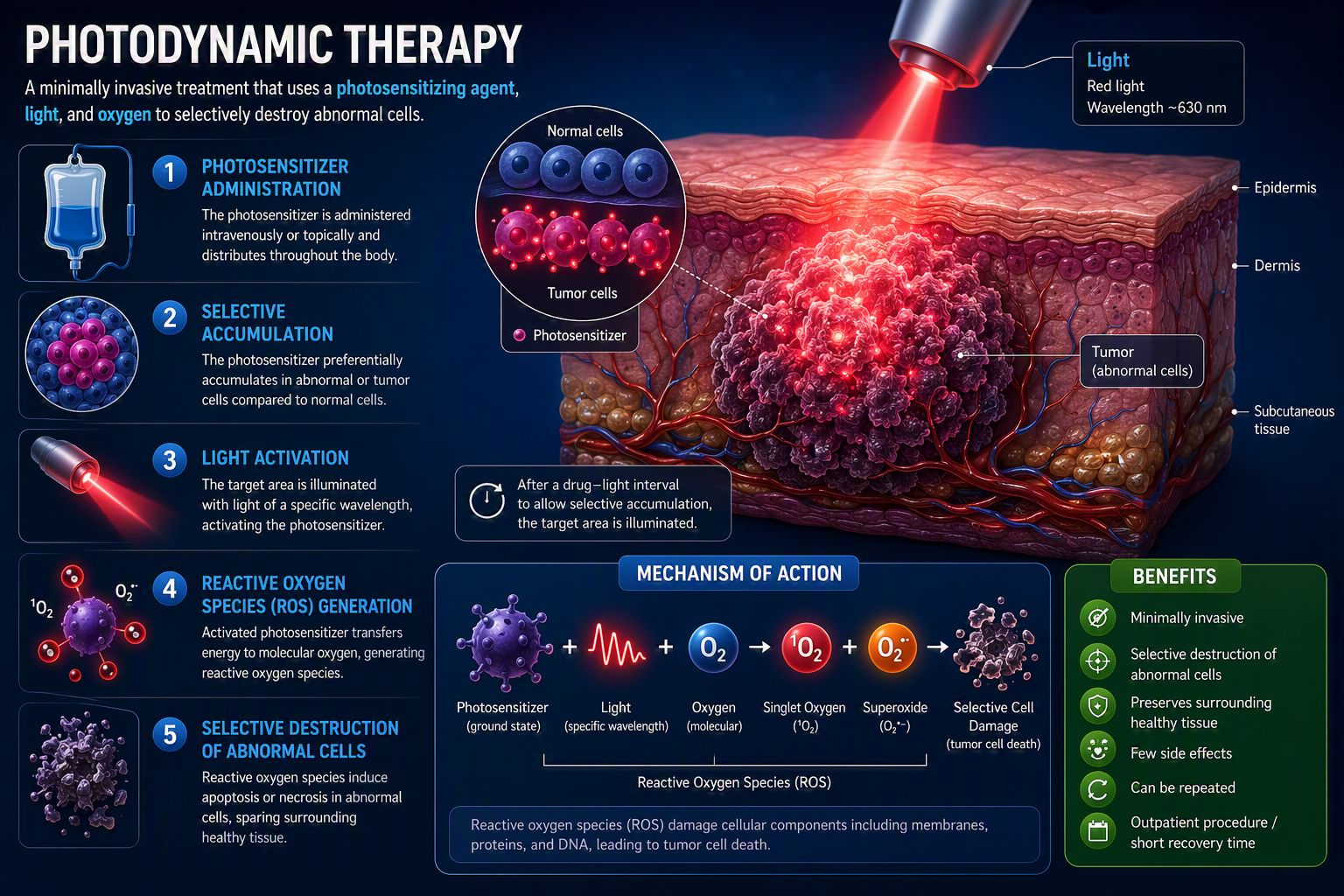
The technology describes a novel family of photoactivatable ruthenium compounds designed as photosensitizers (PSs) for photodynamic therapy (PDT) against cancer. These compounds remain largely inactive in the absence of light and, upon irradiation at an appropriate wavelength, generate reactive oxygen species (ROS) that selectively induce cancer cell death. The invention aims to overcome the limitations of currently available photosensitizers by improving photodynamic efficiency, allowing the activation using red light, which exhibits a deeper tissue penetration ability and facilitates treatment selectivity, thereby reducing damage to healthy tissues and minimizing the side effects associated with conventional chemotherapy.
The Amido-Ruca research group has extensive expertise in inorganic and organometallic chemistry, with a strong track record in the design, synthesis, and characterization of metal complexes for biomedical applications. Its research focuses on platinum-group metal complexes, particularly those based on ruthenium (Ru), iridium (Ir), rhodium (Rh), palladium (Pd), and platinum (Pt), investigating their electrochemical, photophysical, anticancer, and catalytic properties. The group has solid expertise in structural and photophysical characterization, cyclic voltammetry, computational chemistry, and mechanistic studies, and collaborates with national and international partners to develop innovative metal-based compounds for biomedical applications.
Chemotherapy is one of the most widely used treatments against cancer; however, the chemotherapeutic agents used in clinical practice have significant limitations, primarily due to their low selectivity. A prime example is cisplatin, one of the most widely used and effective antitumor agents against various types of cancer. However, due to its mechanism of action, cisplatin not only destroys tumour cells but also affects healthy tissues with high rates of cell division, leading to significant adverse effects such as nephrotoxicity, nausea, vomiting, and alopecia. Furthermore, its reliance on platinum, a scarce and expensive metal, poses an additional limitation in terms of the treatment’s sustainability and availability.
Photodynamic therapy (PDT) has emerged as a promising alternative, as it allows for the local activation of photosensitizers (PSs) through irradiation with visible light to generate reactive oxygen species (ROS) that selectively destroy tumour cells. However, currently available PSs have significant limitations, such as tedious and inefficient synthetic processes, low efficiency in ROS generation, and poor activation by red light, whose deeper tissue penetration is essential for treating deep-seated or large tumours. These limitations have hindered the clinical adoption of PDT and highlight the need to develop new, more efficient PSs that can be activated by red light.
Applications
The technology is intended for the development of novel photodynamic therapy (PDT) protocols for the selective management of solid tumours. Activation by red light (635 nm) enables the treatment of deep-seated or large tumours due to the superior tissue penetration of this type of light. The compounds can be used as next-generation PSs for oncological applications, providing high photodynamic efficacy and remarkable selectivity toward cancer cells. The technology has been validated at the preclinical level in two-dimensional cell cultures, three-dimensional tumour spheroids, and murine models, supporting its potential for further clinical development and commercialization.
New and innovative aspects
Main advantages of its use
Specifications
Desired business relationship
Trade agreement, license agreement, technical cooperation: further development, technical cooperation: testing of new applications; technical cooperation: adaptation to specific needs.
Expected role of the partner:
- Type of partner: Pharmaceutical or biotechnology companies and medical device manufacturers active in oncology and photodynamic therapy, with capabilities in regulatory development, manufacturing scale-up, and commercialization.
- Role of the partner: The partner is expected to support further development, regulatory validation, manufacturing scaling-up and commercialization of the technology through licensing or co-development agreements, facilitating its translation into clinical applications.
Current development status
Lab tested
The aim of the Technology Transfer Office (TTO) of the Universidad de Burgos is to promote Innovative technology through the research results transfer and the connections between the University and the new needs and requirements of society - we are the link between the University and the Industry. Contact person: José Manuel López (jmllopez@ubu.es)
Create your free account to connect with UNIVERSIDAD DE BURGOS and thousands of other innovative organizations and professionals worldwide
Send a request for information
to UNIVERSIDAD DE BURGOS
Technology Offers on Innoget are directly posted
and managed by its members as well as evaluation of requests for information. Innoget is the trusted open innovation and science network aimed at directly connect industry needs with professionals online.
Need help requesting additional information or have questions regarding this Technology Offer?
Contact Innoget support