Portable sensors for wine and beer: aroma monitoring and simultaneous, preventative detection of mercaptans and 4-ethylphenol
Patents for licensing

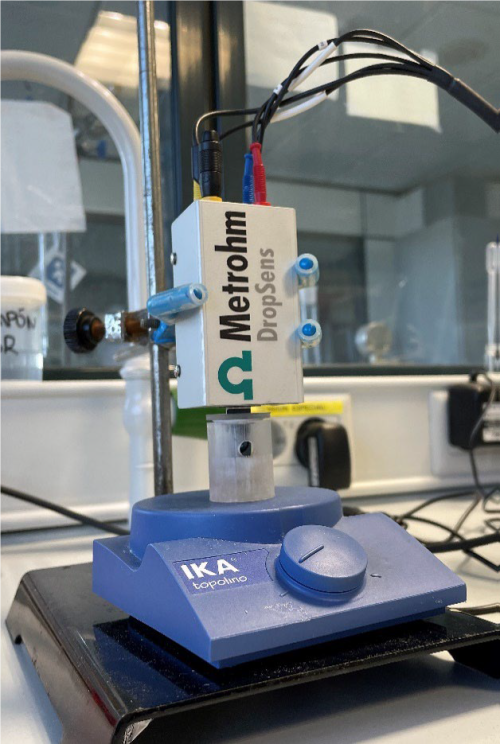
This technology comprises a family of portable electrochemical sensors designed for rapid, in-situ monitoring of volatile compounds responsible for the aromatic quality of fermented beverages, particularly wine. The devices utilize screen-printed carbon electrodes modified with advanced functional materials to enhance sensitivity and selectivity, alongside ionic liquid-based gel electrolytes that ensure high stability and reproducibility. Their compact design enables rapid analysis directly at the point of production, reducing the need for complex analytical techniques. It represents an efficient solution for quality control in the food industry.
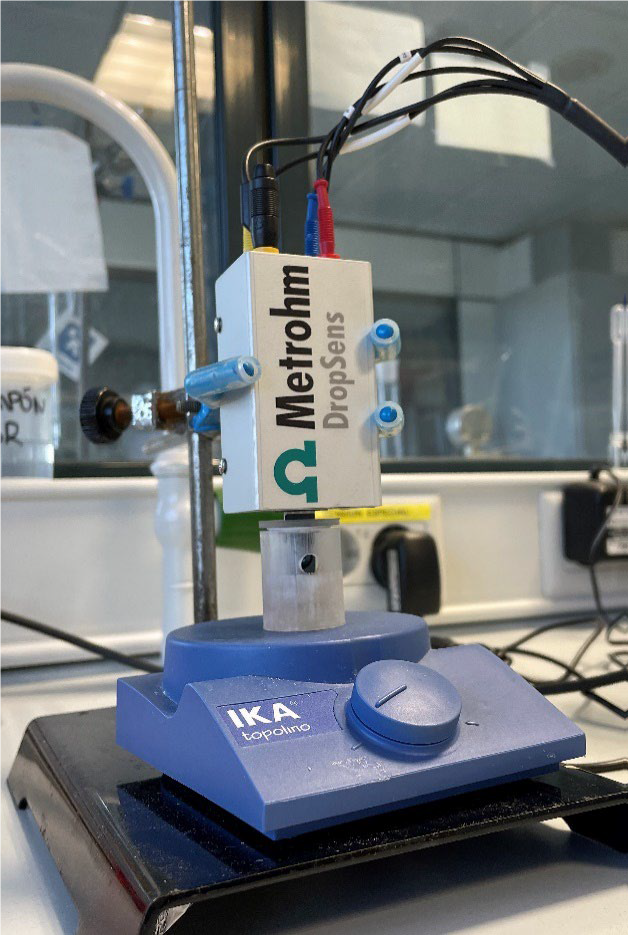
The "Sensors in Food, Environment, and Health" (SAMS) research group at UBU has a proven track record in developing electrochemical sensors designed to detect analytes of interest in food, environmental, and biomedical matrices.
The problem lies in the early, selective, and practical detection of volatile compounds responsible for aroma defects and spoilage in wine, particularly sulfur compounds (mercaptans) and 4-ethylphenol, under real winery conditions. Current analytical methods, mainly based on GC-MS, provide excellent sensitivity but are expensive, time-consuming, and unsuitable for routine on-site monitoring. Existing electrochemical sensors are still limited in terms of selectivity, sensitivity, or ease of implementation. The proposed technology addresses this gap through a family of portable electrochemical sensors capable of rapid, sensitive, and non-invasive in-situ monitoring of key aroma and spoilage markers, enabling real-time quality control and supporting preventive decision-making in modern winemaking, without the need for qualified staff.
Applications
New and innovative aspects
New and innovative aspects common to both sensors:
New and innovative aspects of the mercaptan sensor:
New and innovative aspects of the mercaptans + 4-ethylphenol gas sensor:
Gas-phase analysis without direct contact with the wine sample.
Main advantages of its use
Advantages common to both sensors:
Specific advantages of the gas-phase mercaptan + 4-ethylphenol sensor:
Non-contact gas-phase detection that preserves product integrity.
Specifications
Technical specifications of the mercaptan sensor:
Technical specifications of the gas-phase mercaptan + 4-ethylphenol sensor:
Gas-phase detection without contact with the liquid sample.
Desired business relationship
Expected role of the partner
Type:
An industrial organisation from the agri-food sector is sought, particularly companies in the wine, brewing, or fermented beverage industries, as well as manufacturers of sensors or analytical equipment. Research centres or universities working in analytical chemistry, electrochemistry, or food technology are also suitable partners.
Role:
The partner will be responsible for the co-development, validation, and scaling of the technology, including integration of the sensor into real industrial environments. Their involvement is expected in device optimisation, testing under operational conditions, and eventual transfer to production and commercial deployment.
The aim of the Technology Transfer Office (TTO) of the Universidad de Burgos is to promote Innovative technology through the research results transfer and the connections between the University and the new needs and requirements of society - we are the link between the University and the Industry. Contact person: José Manuel López (jmllopez@ubu.es)
Create your free account to connect with UNIVERSIDAD DE BURGOS and thousands of other innovative organizations and professionals worldwide
Send a request for information
to UNIVERSIDAD DE BURGOS
Technology Offers on Innoget are directly posted
and managed by its members as well as evaluation of requests for information. Innoget is the trusted open innovation and science network aimed at directly connect industry needs with professionals online.
Need help requesting additional information or have questions regarding this Technology Offer?
Contact Innoget support