Melanostatin azapeptides for the treatment of dopamine-related disorders
Innovative Products and Technologies

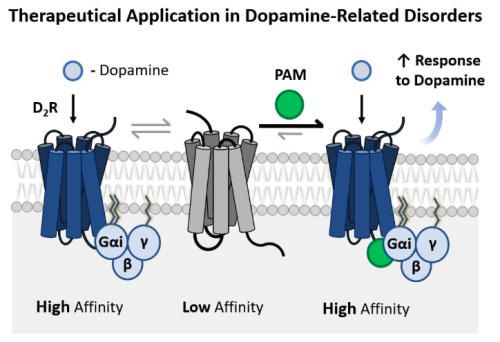
This invention concerns an improved synthetic methodology for the preparation of two cyclic aza-amino acid derivates and a new efficient protocol for the application of these compounds for the assembly of melanostatin-based azapeptides. The new azapeptides possess potent pharmacological activity as positive allosteric modulators (PAM) of the dopamine D₂ receptors at nanomolar concentrations, making them applicable in dopamine-related disorders, such as Parkinson's disease.

Background:
Melanostatin is a short endogeneous neuropeptide that displays potent PAM activity at the dopamine D₂ receptors, thus being of clinical interest as a therapeutical for dopamine-related disorders such as Parkinson's disease, as corroborated in clinical trials. However, its unfavorable pharmacokinetic properties such as low gastrointestinal absorption and reduced biochemical stability in neuronal tissues hinder its further development. Previous research has shown that the replacement of L-proline by D-proline has no significant impact on the pharmacological activity.
Moreover, since the metabolism of melanostatin occurs mainly upon cleavage of the prolyl-leucyl peptide bond, the replacement of this peptide bond with a semicarbazide moiety in melanostatin azapeptides is expected to increase biochemical resistance against protease activity without compromising the PAM activity. The incorporation of aza-amino acids in detriment to canonical amino acids is known to enhance pharmacological activity and selectivity as well as improve pharmacokinetic properties. Aza-proline is being employed as a proline surrogate in bioactive compounds as a chemical strategy to enhance potency and bioavailability.
Benefits:
Potential comercial use/applications:
This invention provides a new method to develop intermediates for azapeptides synthesis, as well as a prospective active pharmaceutical ingredient (API) suitable for the treatment of dopamine-related diseases.
U.Porto Inovação was established in 2004 to support the University’s innovation value chain by facilitating the transfer of knowledge and strengthening the relationship between the University and businesses. With over 20 years of experience, U.Porto Innovation focuses its activities on research at the University, entrepreneurship within the academic community and U.Porto’s growing connections with industry.
Create your free account to connect with University of Porto and thousands of other innovative organizations and professionals worldwide
Send a request for information
to University of Porto
Technology Offers on Innoget are directly posted
and managed by its members as well as evaluation of requests for information. Innoget is the trusted open innovation and science network aimed at directly connect industry needs with professionals online.
Need help requesting additional information or have questions regarding this Technology Offer?
Contact Innoget support