One-Electrode Contactless Cells
Innovative Products and Technologies

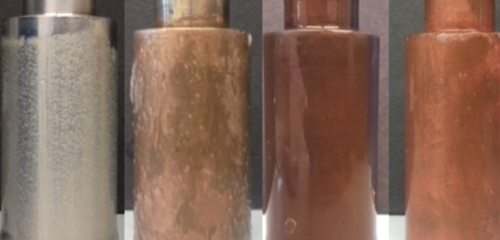
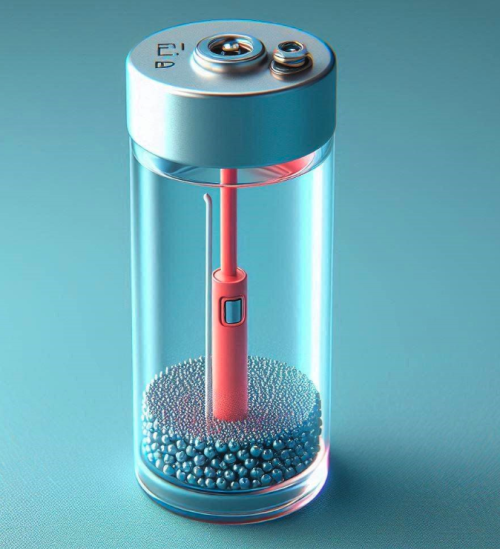
The present invention discloses a device that consists of one-electrode cells that can be used individually or connected to form a series of two or more cells. In a device constituted by one or more ferroelectricity-induced superconductor cells, the cells do not have to be in physical contact with one another; with the spontaneous and dynamic allignment of the dipoles of the ferroelectric, a potential difference is induced in different points of the surface of the cell, cells or device and a current can be harvested by conductor-terminals.

Background:
The current state of the art cells are electrochemical cells with two-electrode systems, which can limit scalability and efficiency. Traditional designs usually involve complex assemblies and have problems due to physical contact such as corrosion, degradation and poor electrical contact over time. Moreover, conductive connections between cells introduces resistance, leading to energy and efficiency losses.
Current superconductor technology requires complex cooling and thermal conditions to achieve these results, however a two-dimensional superconductivity can be acquired in the interface between two materials with very different permittivities, such as a ferroelectric and another material. The present invention takes advantage of this.
Benefits:
This invention presents scalability, as the cells can easily be connected in series therefore adding their potentials. Its contactless operation reduces the risk of electrical shorts and corrosion, improving the safety and reliability of the battery system. The contactless energy transfer can also reduce energy loss associated with conventional conductive connections, leading to improved overall system efficiency.
The one electrode cells disclosed by the current invention can harvest and store ferroelectric energy for years without degradation (even while discharging a device cell), ultimately proving itself very durable and efficient.
Potential comercial use/applications:
This invention presents several applications, such as: a device for energy harvesting; an energy storage device, part of a transistor, of a computer, of a quantum computer, of a sensor, of a charger, of an actuator, of a thermionic device, of a temperature controller, of a photovoltaic cell, of a panel, of a wind turbine, of a smart grid, of an electric power transmission, of a transformer, of a power storage device, of an electric motor, of an airplane, of a car, of a boat, of a submarine, of a satellite, of a drone, of a rocket and/or of a space vehicle, of other devices.
U.Porto Inovação was established in 2004 to support the University’s innovation value chain by facilitating the transfer of knowledge and strengthening the relationship between the University and businesses. With over 20 years of experience, U.Porto Innovation focuses its activities on research at the University, entrepreneurship within the academic community and U.Porto’s growing connections with industry.
Create your free account to connect with University of Porto and thousands of other innovative organizations and professionals worldwide
Send a request for information
to University of Porto
Technology Offers on Innoget are directly posted
and managed by its members as well as evaluation of requests for information. Innoget is the trusted open innovation and science network aimed at directly connect industry needs with professionals online.
Need help requesting additional information or have questions regarding this Technology Offer?
Contact Innoget support