 Mikael NybergMikael Nyberg
Mikael Nyberg
Head of Product at Baia Group from Finland · Turku
I am a founding member of Baia Group and have worked with the company for over 2 years. Currently I work as head of product. I have a Master's degree in computer engineering and have done my Master's thesis and subsequent research in the field of optimization, specializing in deterministic, heuristic and hybrid optimization methods for solving process and production optimization problems. Neeraj WilfredNeeraj Wilfred
 Clinton HauerClinton Hauer
 Helen XuHelen Xu
Helen Xu
R&D Manager at LPG cylinder tracking from China
We successfully developed permanent barcode tags for LPG gas cylinders,it will work together with gas cylinder tracking software system. Which use corrosion resistant metal as matrix and integrate barcode information with ceramic glaze. The barcodes are corrosion-resistant and aging-resistant,which corresponds to the long life time and hostile working environment of gas cylinders.The chemical stability,corrosion-resistance,abrasion-resistance and temperature-resistance of glaze are very reliable.So when we integrate barcode information with glaze,we can protect barcode information from aging,corrosion,abrasion and high temperature while using barcodes in hostile working environment. The special barcode labels produced by Xiangkang have competitive prices and are being used by more than 3000 gas filling stations around the country.In the recent ten years,we have sold 70 millions.There is no doubt that the quality and life time of our barcode tags can satisfy the real usage of gas cylinders. Email:helen@czxkdz.com Skype:richardgu8 http://www.cylindertrack.com Xiangkang Eletronic Co.,ltd No.1199 Defu, Jiading District Shanghai jeff stollmanjeff stollman
jeff stollman
Expert at rmtm from United States
Jeff Stollman is a polymath developing solutions to difficult problems across a wide range of disciplines including blockchain, sensors, robotics, financial services, force protection, weapons demilitarization, supply-chain integrity, non-lethal weapons, information technology, information security, and privacy. He currently holds patents in artificial intelligence, information security, privacy, and financial services and has patents pending in blockchain, supply chain integrity, medication adherence, and non-lethal weapons. He has been effective developing "out-of-the-box" solutions by using novel technology from one discipline to cross-fertilize another. In this way, he has developed novel solutions that were invisible to the same way of looking at problems. In addition to his technical expertise, Mr. Stollman has managed both businesses and programs valued in the hundreds of millions of dollars with full P&L responsibility. Mr. Stollman holds a Masters degree from Tufts University and has supported prestigious clients including IBM, Boeing, Northrop Grumman, US Bank, Merrill Lynch, Bristol-Myers Squibb, Ford, and a wide array of federal agencies, including the DoD and Intelligence communities. He is deeply involved in global standards organizations, having served as chairman of the Privacy and Public Policy working group of the Kantara Initiative. He currently serves as a technical expert to the International Telecommunications Union – Technology (ITU-T) organization and supports the United Nations Commission on International Trade Law (UNCITRAL). Mr. Stollman has presented at such conferences as Global Indexing and ETFs, the European Identity and Cloud Conference, the RSA security conference, the Healthcare Distributors Association Traceability Seminar, the Internet Identity Workshop, and the Computer Security Institute. He has also appeared as an expert witness on behalf of the US EPA in public hearings on the economic impact of proposed noise abatement regulations, and has testified at numerous hearings on protests of federal procurements. Av Home ExpertsAv Home Experts
 Raka GuptaRaka Gupta
Raka Gupta
Inventory that Counts Itself! at Loadstar Sensors from United States · Fremont
StockVUE provides an IoT solution to track your inventory of any kind of product autonomously. We remote access to your inventory with minimal human intervention. Our Easy to use APIs provide connectivity between StockVUE Cloud and your ERP or Warehouse management system making it compatible with your existing ERP and MRP system Chinmay ChaturvediChinmay Chaturvedi
 Praveen Kumar A XPraveen Kumar A X
 Merna EmiraMerna Emira
 Sudam PawarSudam Pawar
Sudam Pawar
Senior Executive at Development Associates from India
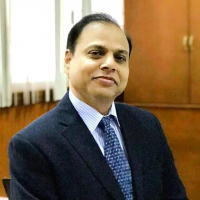
Sudam Pawar has worked extensively over the past 20 years in Asia and Africa with deep professional experience in strategic leadership, innovation commercialization, and private sector development as strategist with a focus on technology based economic development and management of key areas of operations in a multi-cultural organization, national organization providing support on a global scope. As a member of a senior management team, Sudam played a significant role as a creative, stimulator for engaging with vast networks of strategists, thinkers and problem solvers supporting innovative business concepts, bringing together like-minded Impact-Driven Enterprises through collaboration and contributing positively to each other’s development. He is trusted business/Programme advisor and took responsibility for managing and supervising the delivery of a division's Programme of work considering regional priorities within available human, financial and material resources. Throughout his career, Sudam is passionate to develop a deep understanding of the challenges through in-depth exploration to bring innovative business solutions. He has proactively led programs with viable innovation by planning and management, according to operational requirements such as work plans, assessment, and best practices in the areas of regional economic integration, cooperation including technological connectivity in Agri-Business, Energy, Water, Trade and Environment Sudam has a demonstrative experience and ability at leading and managing multicultural teams, by engaging actively in all phases by reviewing and innovating core processes in order to achieve better efficiency and effectiveness, considering financial sustainability, of operations; enhancing synergy among staff and holding staff accountable for results and ensuring the preparation of all divisional publications, reports and governing bodies documents. Sudam has a significant experience as accelerator, strategic consulting, Cooperation and economic development, representing organization at high level panels, workshops, conferences and other public events. Alberto MalerbaAlberto Malerba
 Josep M. FabregaJosep M. Fabrega
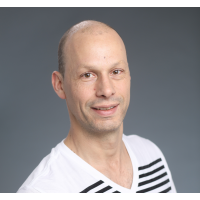
Josep M. FabregaI am a telecommunications engineer with 15+ years of experience in signal processing, measurement systems and optical subsystems and networks R&D. I obtained the BSc and MSc degrees in telecommunications engineering from Universitat Politecnica de Catalunya (UPC-BarcelonaTech) in 2002 and 2006, respectively. In 2010, I obtained the PhD (hons.) in signal theory and communications from UPC-BarcelonaTech. During 2004-2010 I was R&D engineer in the optical communications group of UPC-BarcelonaTech, where I carried out the PhD. After finishing the PhD in 2010, I joined the optical networks and systems (ONS) department of the Centre Tecnologic de Telecomunicacions de Catalunya (CTTC) as post-doctoral researcher. In November 2012 I was upgraded to become permanent researcher of the same department, and in March 2017 I was promoted to a senior researcher position of the ONS department of CTTC. Since February 2014 I work with Universitat Oberta de Catalunya (UOC) in the framework of MSc in telecommunications degree, where I also have developed different didactic materials and directed several related theses I work as a engineering consultant since 2018, closely collaborating with companies and other independent professionals in order to design and develop different specific solutions involving signal processing, measurement automation and optoelectronics. Passion for engineering and technology is my major motivation, encouraging me to work in different innovative (and challenging) concepts, not only from the design and modeling perspective, but also involving actual development, prototyping and test.
 Adrià Gómez OlivellaAdrià Gómez Olivella