SMAR3TS project partner – Kouvola Research & Innovation Unit (LUT University) is seeking innovative approaches to build climate-resilient, regenerative regional food systems that can thrive under the intensifying pressures of climate change while advancing sustainability, nutrition and economic opportunity.
Europe is confronting escalating impacts from extreme weather — from heatwaves to floods — that increasingly undermine food security, health, livelihoods and economic stability. In response, the European Commission has launched a public consultation on a new climate resilience framework aimed at making Europe stronger, safer and better prepared for future climate challenges. This framework will emphasise resilience by design, coordinated preparedness, risk reduction and innovative climate-resilient technologies across sectors.
Food systems are a central component of this challenge: they are both vulnerable to climate shocks and a major driver of emissions and ecological degradation. Traditional food supply chains are optimised for cost and efficiency, not resilience or sustainability. To address this, climate-ready food systems must integrate regional value chain redesign, circular biomass utilisation, low-impact proteins, sustainable packaging and food-waste valorisation into coherent, context-specific strategies.
The Kymenlaakso region — a bioeconomy, logistics and industrial hub of Finland — offers an ideal living lab for co-creating, testing and scaling regenerative food system innovations that align with emerging European prioriites and strategic agenda of shaping climate resilience actions.
Within SMAR3TS, this I3X aims to accelerate food systems' approaches that contribute to climate resilience at the regional and EU levels.
In response to this I3X, secondees could work on e.g.:
- Designing regional food supply chains that are resilient to climate extremes
- Developing low-impact protein systems from biomass and side-streams
- Creating bio-based, biodegradable packaging for climate-smart food distribution
- Transforming food waste into high-value food and ingredients
- Linking digital tools and data to food-system planning and risk management
- Measuring social, environmental, and economic resilience outcomes
Necessary skills and capabilities across disciplines
- Food systems and nutrition
- Food technology and new proteins
- Bioeconomy and biomass processing
- Circular materials and sustainable packaging
- Logistics and supply-chain design
- Digital platforms and climate data
- Sustainability and life-cycle assessment
- Business, markets and policy
- Regional development and governance
Examples of challenges that need to be addressed
Exposure to climate hazards
Food systems are vulnerable to heat, floods, droughts and supply chain shocks that undermine reliability and affordability.
Unsustainable production and waste
Conventional protein systems, fossil-based packaging and food waste contribute to emissions and degrade resilience.
Fragmented innovation ecosystems
Technology, industry, policy and communities often work in silos, slowing system-level change.
Policy misalignment
Existing frameworks lack integrated guidance to align food, climate, health and regional development priorities.
I3X at the University of LUT University (Kouvola, Research and Innovation Unit, Finland)
About the initiator
1. Background info
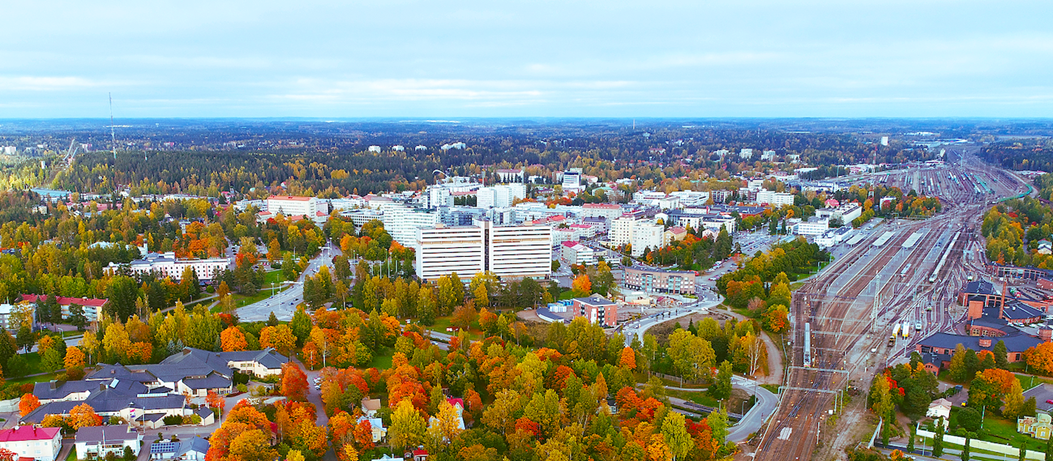
The Kouvola Research & Innovation Unit at LUT University operates in the Kymenlaakso region — a strategic hub for bioeconomy, logistics, food-system transformation and sustainable industrial innovation.
2. Research Group / Company Department
The Kouvola unit bridges industry, municipalities and research to co-design regenerative food systems, circular materials and resilient regional ecosystems.
Contact persons:
Dr. Kateryna Kryzhanivska, kateryna.kryzhanivska@lut.fi
and Prof. Marko Torkkeli, marko.torkkeli@lut.fi
See attachment for more information about the I3X initiator and this I3X.
Alignment to Work-Packages (Nutrition, Mobility, Energy, Housing)
This I3X is aligned primarily with the Nutrition work package.
Alignment to Resilience, Restoration, Regeneration (R3)
This I3X aims to contribute to:
Resilience: By strengthening regional- and national-level food systems' robustness under climate, economic, and security shocks, through digital and collaborative innovation.
Restoration: By reducing emissions and environmental degradation in food production and materials.
Regeneration: By rebuilding regional capacity for circular, low-carbon and equitable food systems that support long-term wellbeing.