SMAR3TS project partner - PARE is looking for innovative solutions to improve the Resilience of Multifunctional Neighborhoods within the 15-minutes City Concept: Workplaces Perspective.
PARE (Estonian HR Association) is at concept stage for a program on workplace-neighborhoods—how the immediate public realm around worksites (5–15-minute catchments) relates to HR outcomes (well-being, engagement, absenteeism/presenteeism, retention). PARE does not have an internal R&D unit; our role is to convene employers, broker academic–city partnerships, and translate evidence into HR practice.
In the current stage of ideation, the goal is to identify perspective partners to form a consortium (PARE + university methods lead + municipal/landlord partners). Potential areas of research, innovation, and engagement work that can be achieved within the secondment include the following:
- Evidence & Theory: scoping review; theory of change (neighborhood → exposures/behaviors → HR outcomes).
- Measurement Design: WNQI v0.1 (objective GIS/remote-sensing candidates; short perception scales; HR-relevant outcomes); data protection plan.
- Stakeholder engagement: interviews/workshops with employers, city units, and landlords; site selection and MoUs.
- Pilot readiness: pre-analysis plans (DiD/event-study templates), instrument list (steps/usage, short affect scales), feasibility testing of data flows.
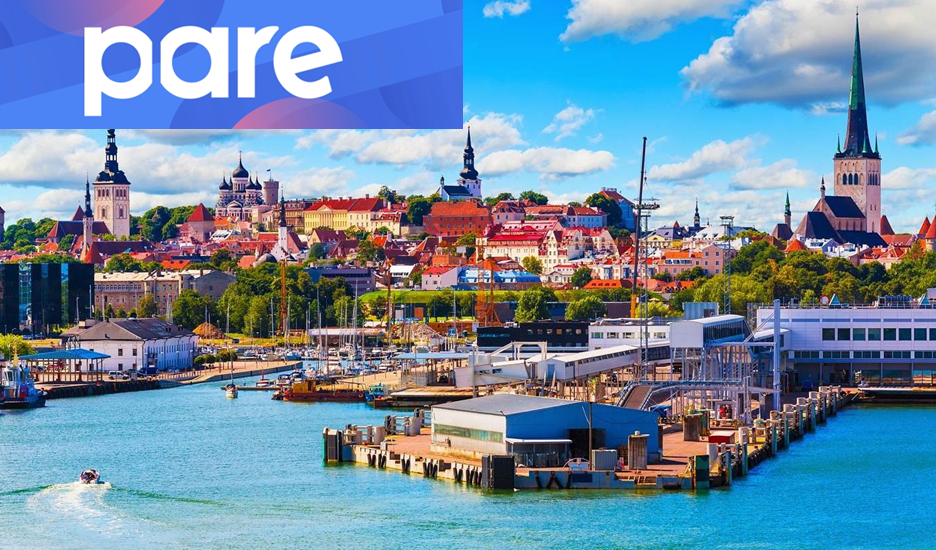
Express your interest in SMAR3TS secondment - Your opportunity at PARE (Tallinn, Estonia)
This I3X challenge is initiated by PARE within the SMAR3TS project and requires a secondment with a minimum duration of 30 days (to take place starting from Dec 2025). Fully funded by the European Commission, the four-year SMAR3TS project started in October 2025 and unites 35 partners worldwide to accelerate resilient, restorative and regenerative transitions through research and innovation mobility.
For more info: please see the details in the attachments.
Please note: the secondments are open only to SMAR3TS Consortium Partners.
Necessary skills and capabilities across disciplines
- HR analytics and quasi-experimental causal inference (DiD, synthetic controls, event studies).
- Urban design & public-health expertise (walkability/greenness/food environment measurement; GIS, remote sensing).
- Environmental sensing (portable noise and air-quality monitors) and digital phenotyping (privacy-by-design).
- Economic evaluation (productivity, absenteeism/presenteeism, turnover) and business case modelling.
- Stakeholder engagement & co-creation with employers, commercial landlords, and municipalities.
- Implementation science and impact evaluation (process + outcome metrics).
Examples of challenges that need to be addressed
- Causality & internal validity:
Separating neighbourhood effects from selection (e.g., high-performing firms choosing premium districts). Use natural experiments (streetscape upgrades), phased rollouts, or instrumental variables; triangulate survey, HRIS, and sensor data.
- Measurement:
Standardizing WNQI across contexts; integrating objective GIS/sensor measures (walkability, greenness, noise, PM₂.₅) with perceived quality and usage patterns. Existing studies emphasize activity and well-being but rarely tie to core HR metrics.
- Equity & inclusion:
Ensure interventions benefit lower-income workers, shift workers, and SMEs with limited on-site amenities; avoid displacement.
- Data governance & privacy:
GDPR-compliant handling of fine-grained mobility/sensor data; differential privacy for HR analytics.
- Adoption & scaling:
Align incentives among employers, landlords, and cities; quantify ROI (absenteeism reduction, retention, engagement, productivity) vs. capital/operating costs.
- Environmental externalities:
Coordinating with city policy on air/noise mitigation where evidence shows productivity penalties.
I3X at PARE – About the initiator
1. Background info
Estonian HR Association PARE is a non-profit union of human resource management professionals established in 1993. PARE is Estonia’s national community of HR professionals, advancing evidence-based people practices, strategic HRM, and healthy work ecosystems through advocacy, capability building, and research-practice partnerships. Our website: https://pare.ee/
2. Research Group/Company Department
PARE convenes employers, municipalities, and researchers to co-produce actionable evidence on the future of work, including built-environment determinants of HR outcomes.
Link to the website: https://pare.ee/
Contact:
Contact person in the project is Managing Director Kai Saard, kai@pare.ee. Current project initiator is the Vice Chairman of the Board Maria Kütt, mariakytt@gmail.com
See attachment: Expertise and available technologies at PARE within the SMAR3TS project and examples of strategically relevant I3X Initiatives.
Alignment to Work-Packages (Nutrition, Mobility, Energy, Housing)
SMAR3TS domains that are relevant to the work of PARE organization:
Within the domain of HOUSING:
1) Sustainable cities and communities:
the multifunctional or workplace-neighborhood as a micro-district (5–15-minute catchment) where public-realm quality (shade/green, crossings, seating, noise/air) influences workers’ daily exposures and community vitality.
Example questions:
- Which neighborhood attributes around worksites are associated with healthier daily routines and equitable access to restorative spaces?
- How can employer–city micro-investments upgrade these attributes?
- How can different functionalities (e.g, housing, workplaces, services) be best integrated to support resilience of urban space?
2) Healthy work and mobility:
links between the immediate surroundings of the workplace and employee well-being, micro-restoration during breaks, and active travel at/around work hours.
Example questions:
- Do walkability and proximate green/blue spaces shift sedentary time and affect during the workday?
- Do local food environments around worksites nudge healthier choices?
3) Data-driven decision-making and urban governance:
translating neighborhood features into HR-salient indicators for employers and simple, governance-ready signals for city partners.
Example questions: What minimal, privacy-preserving metrics allow employers to benchmark workplace-neighborhood quality and co-prioritize upgrades with cities?
Alignment to Resilience, Restoration, Regeneration (R3)
- Resilience: Active-travel-supportive and amenity-rich worksite areas reduce sedentary time and promote everyday activity—protective against stress and chronic disease; organizational resilience via higher attendance and performance (Adlakha et al., 2015; Cantley et al., 2024).
- Restoration: Nearby greenspace and restorative micro-break options are associated with better affect and well-being at work; nature-based interventions around worksites show benefits for creativity and mental health (Gilchrist et al., 2015; Lygum et al., 2023).
- Regeneration: Employer–city partnerships can co-invest in public-realm upgrades (shade, seating, pocket parks, safe crossings), improving urban equity and environmental quality (air/noise), with productivity co-benefits. Evidence links air pollution and noise to lower worker productivity and cognitive performance, building a case for environmental regeneration near worksites (Dechezleprêtre & Vienne, 2025; Jafari et al., 2019).
Note:
The expression of interest for this secondment must be submitted via the platform. Submissions will be reviewed on a rolling basis, and you will be contacted as soon as possible. For any questions, please contact: info@smar3ts.eu
References
Adlakha, D., Hipp, A. J., Marx, C., Yang, L., Tabak, R., Dodson, E. A., & Brownson, R. C. (2015). Home and workplace built environment supports for physical activity. American journal of preventive medicine, 48(1), 104-107. https://doi.org/10.1016/j.amepre.2014.08.023
Cantley, A., Hurley, J. C., Todd, M., McEntee, M., Hooker, S. P., Ohri-Vachaspati, P., ... & Adams, M. A. (2024). Walkability around the worksite and self-reported and accelerometer-measured physical activity among adults. Health & place, 85, 103143. https://doi.org/10.1016/j.healthplace.2023.103143
Dechezleprêtre, A., & Vienne, V. (2025). The impact of air pollution on labour productivity: Large-scale micro evidence from Europe.OECD Science, Technology and Industry Working Papers,14,https://dx.doi.org/10.1787/318cb85f-en
Gilchrist, K., Brown, C., & Montarzino, A. (2015). Workplace settings and wellbeing: Greenspace use and views contribute to employee wellbeing at peri-urban business sites. Landscape and Urban Planning, 138, 32-40. https://doi.org/10.1016/j.landurbplan.2015.02.004
Jafari, M. J., Khosrowabadi, R., Khodakarim, S., & Mohammadian, F. (2019). The effect of noise exposure on cognitive performance and brain activity patterns. Open access Macedonian journal of medical sciences, 7(17), 2924. https://doi.org/https://doi.org/10.3889/oamjms.2019.742
Lygum, V. L., Dupret, K., Bentsen, P., Djernis, D., Grangaard, S., Ladegaard, Y., & Troije, C. P. (2023). Greenspace as workplace: benefits, challenges and essentialities in the physical environment. International Journal of Environmental Research and Public Health, 20(17), 6689. https://doi.org/https://doi.org/10.3390/ijerph20176689