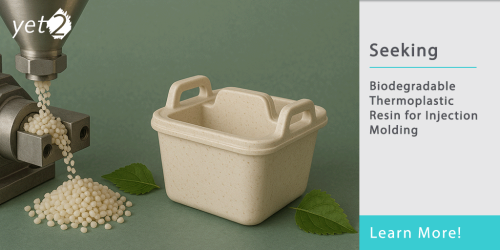
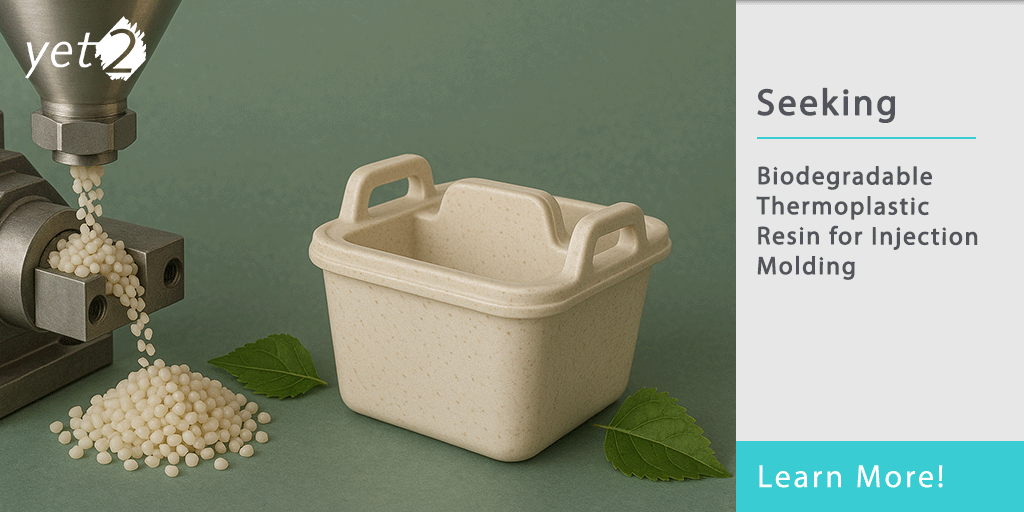
Seeking Biodegradable Thermoplastic Resin for Injection Molding
Specific Technical InnovationProject Size Range : 50,000 - 250,000 €
PepsiCo is seeking biodegradable, injection-moldable resins that could serve as drop-in or near drop-in replacements for polyolefins such as polyethylene (PE) and polypropylene (PP) in injection-molded closures and other primary packaging components used for food and beverage applications with direct food contact.
Background
Polyolefins, such as polyethylene (PE) and polypropylene (PP), are widely utilized in injection molded packaging due to their favorable properties. These thermoplastics offer advantages like low cost, chemical resistance, durability, and ease of processing, making them suitable for various applications, including rigid containers, threads, and closures. Despite their widespread use, most polyolefins are derived from petrochemicals and are resistant to biodegradation, leading to long-term persistence in the environment and growing concerns around plastic waste and pollution. Various biodegradable and compostable materials, such as polylactic acid (PLA), polybutylene adipate terephthalate (PBAT), polyhydroxyalkanoates (PHA), and thermoplastic starch (TPS) blends, have been explored as alternatives to traditional polyolefins. However, many of these materials lack the mechanical strength or processability required for injection molding applications. Moreover, some have densities greater than 1 g/cm3, which causes them to sink in water and hinders separation in recycling systems that rely on flotation to isolate polyolefins. This density mismatch is particularly problematic in fiber-based packaging formats, where plastic closures must float during paper repulping for efficient separation from the fiber stream, and in some cases, must also be compatible with PET bottle recycling processes. Developing a resin with a density below 1 g/cm3 that can be formed into injection-molded closures and other primary packaging components would address both the mechanical and recycling-level requirements for fiber-based packaging combinations. Such material would support PepsiCo's sustainability goals by reducing reliance on fossil-based plastics, minimizing environmental impact, meeting corporate targets, complying with regulations, and addressing consumer demand for eco-friendly packaging.
Key Success Criteria
Must-Haves
Nice-to-Haves
Possible Approaches
Approaches not of interest
Preferred Collaboration types
Additional Information
Our mission is to advance GU’s innovations through strategic alliances and new venture creation, to facilitate the translation of research breakthroughs into tangible solutions, and to cultivate a dynamic and inclusive environment for entrepreneurship. We advance this mission in support of the GU community and for the benefit of society.
Create your free account to connect with PepsiCo and thousands of other innovative organizations and professionals worldwide
Innovation Needs on Innoget are directly posted and managed by its members as well as evaluation of proposals. Innoget is the trusted open innovation and science network aimed at directly connect industry needs with professionals online.